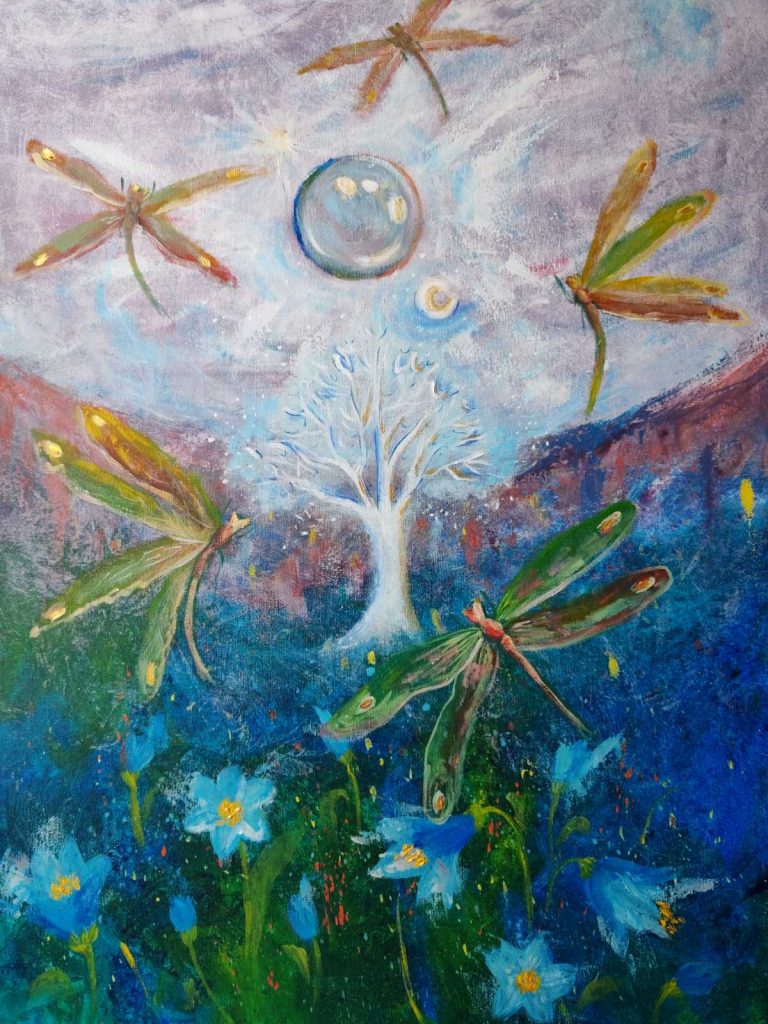
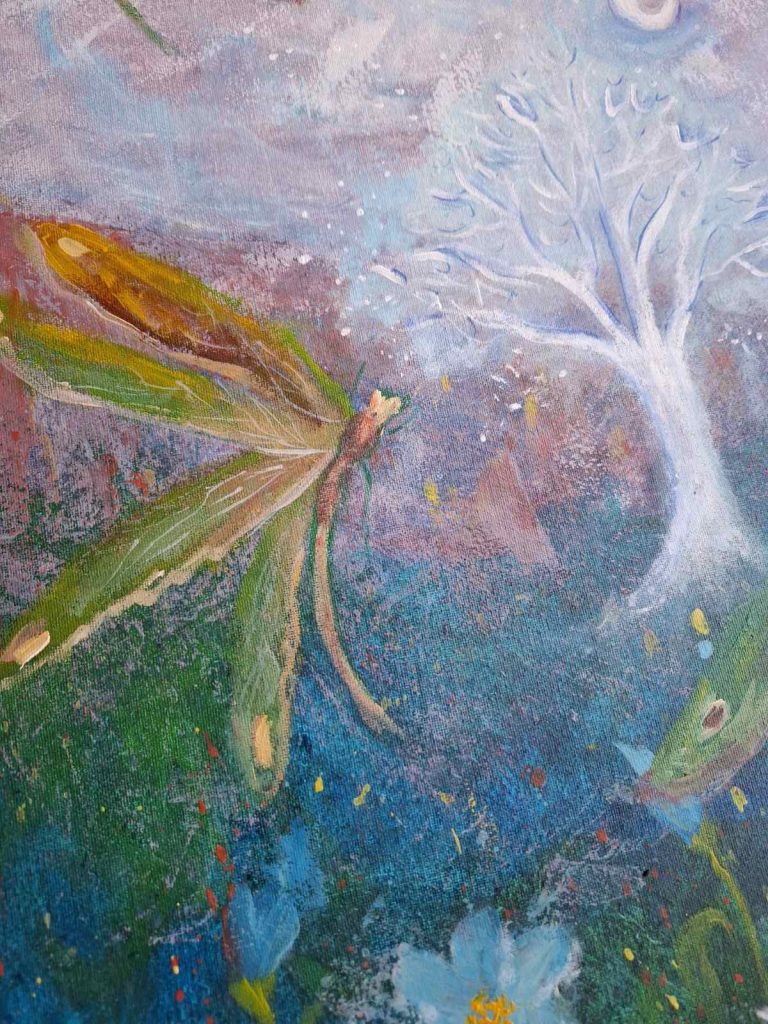
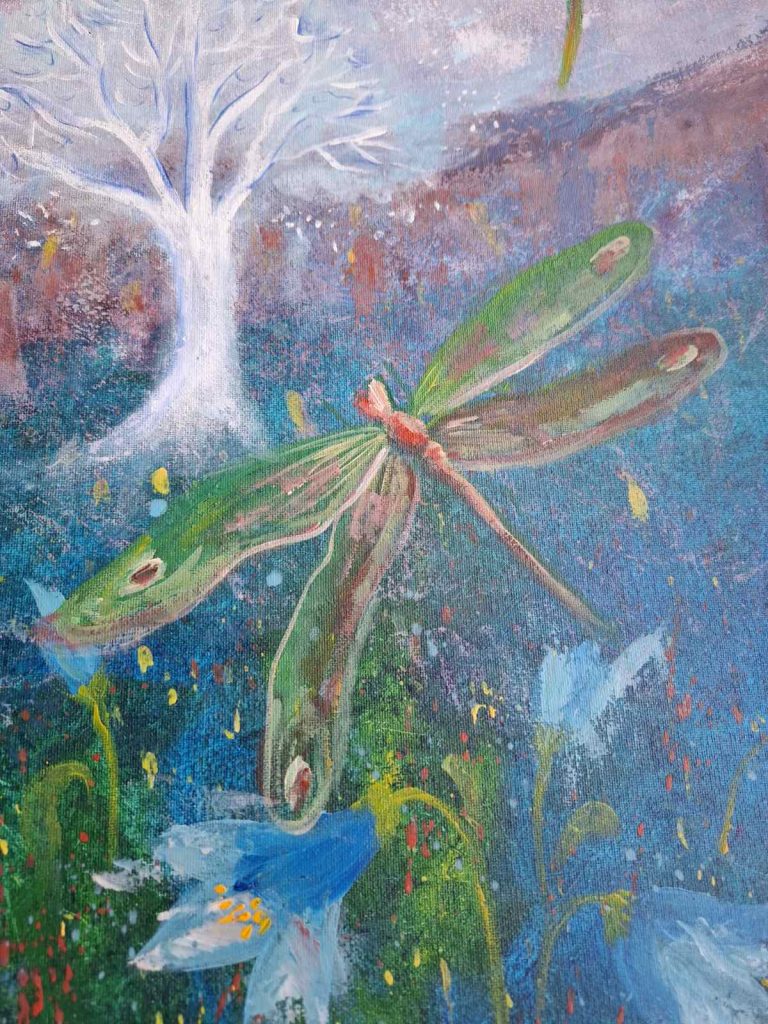
The main theme White Tree is family — the foundation of everything, as emphasized by the narrator. From the very beginning, we are introduced to a space between the conscious and the unconscious, building a psychological framework for the story — What do dreams whisper when we lay our heads on pillows? The motif of the dream appears as a terrain where suppressed feelings, fears, and traumas are articulated through symbolic images. For example, the dream of the little dragonfly about losing her mother manifests one of the greatest fears in early childhood, while the loss of home and relocation to an unknown place further intensify this insecurity. Thus, the dream is not merely an image but a call to the inner self to confront uncertainty and fears.
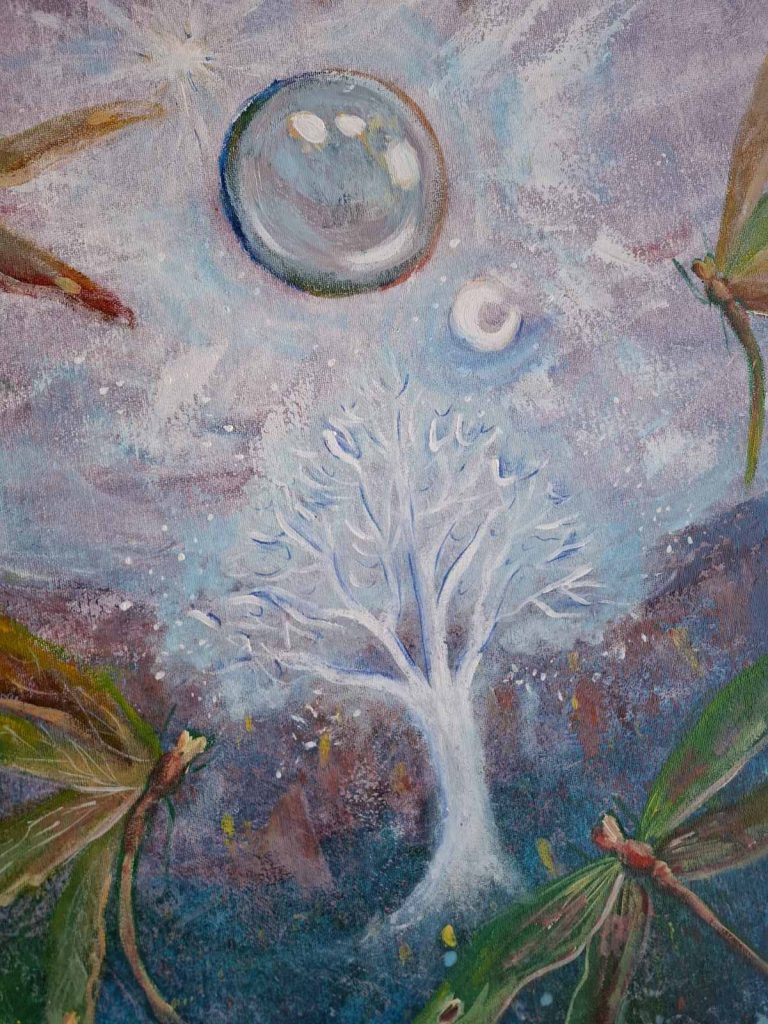
The story can also be interpreted through its symbolic title, as the white tree becomes the most intriguing element of the narrative. It is simultaneously a symbol of sorrow, the past, and the collective pain of nature, but also of potential healing. The white tree does not speak directly — it "whispers" at night, first through indistinguishable sounds, and then more clearly, through the sorrowful cries of the tree longing for family, love, and support.
This can be seen as a projection of unconscious pain that cannot be expressed in words but only felt as discomfort and sadness. When the dragonfly family faces the pain carried by the white tree, their fear of it ceases. By listening to its story, they unconsciously accept it, demonstrating that empathy — rather than defensive mechanisms — is the path to understanding and integration with what frightens us.
Analysis of the tale
All images seen here are the result of my personal effort and creativity. Please do not use them for commercial purposes or repost them without proper credit and my permission. If you are interested in a collaboration or purchase, feel free to contact me.